Unlocking Wellness: Understanding Your Autonomic Nervous System

McElwee Natural Health and Healing clients are very familiar with the terms blocked and switched. Who among us hasn’t been one or the other at some point in our health journeys? Likely not many, which is why we find ourselves taking this health journey. Today, we will discuss the autonomic nervous system, what it means to be blocked or switched, their effects on your health, and how we correct them, as these are foundational to healing.
Is there a locked muscle?
Before we dive into blocked and switched, let’s quickly discuss the importance of having a locked muscle. A locked muscle is your body’s reaction when the health practitioner applies pressure during the Nutrition Response Testing process. This simple check is done by pushing on an arm, leg, or other body part in the hopes that the muscle locks when challenged. If the muscle does not lock, the health practitioner must identify if a stressor is pulling away energy from that muscle. Once it is determined that the muscle does lock, the practitioner can assess if the client is blocked.
Blocked Explained
Much like determining if there is a muscle lock, determining if a client is blocked involves testing the muscle when pressure is applied to a specific area, primarily the umbilicus. It seems straightforward, but to better understand what it means, let’s first define some terms.
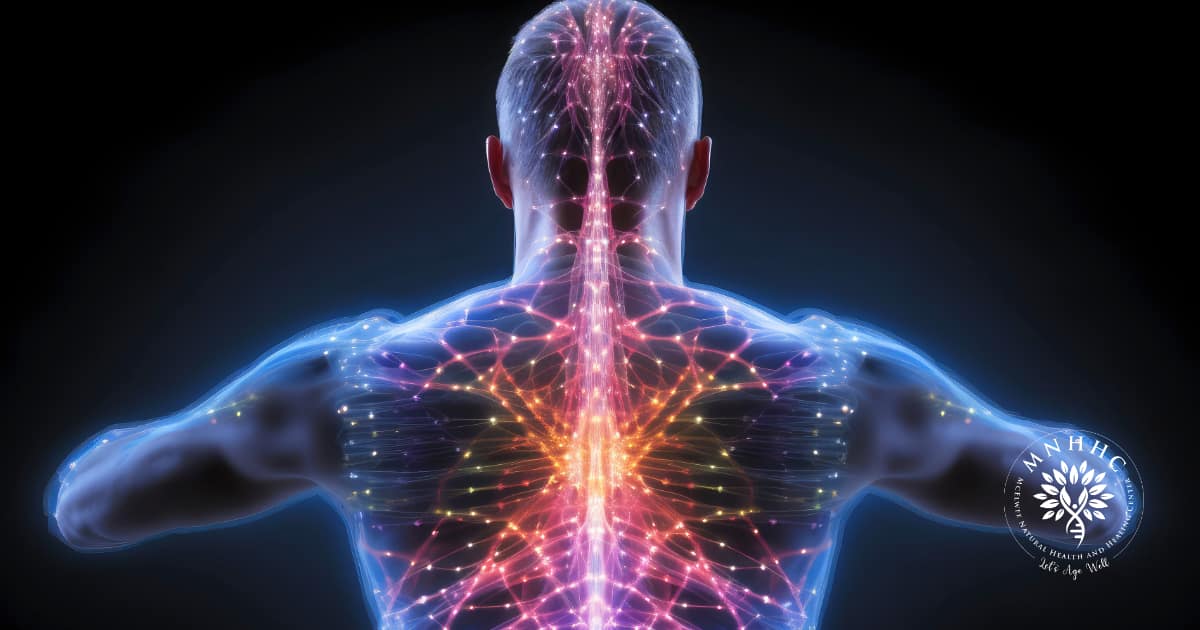
When assessing a block, we are analyzing the state of your autonomic nervous system (ANS). This part of the nervous system regulates critical involuntary body functions, including the activity of the heart and circulatory system, breathing, digestion, immune function, cellular repair, etc. These are the bodily functions that are not under your conscious control.
Sympathetic and Parasympathetic Nervous Systems
There are two parts of the ANS:
- Sympathetic nervous system (SNS). Otherwise known as the fight-or-flight response, the SNS enables the body to prepare for “action” in response to stress or strenuous physical activity. During this time, the SNS will accelerate heart rate, widen bronchial passages, decrease the motility of the large intestine, constrict blood vessels, cause pupil dilation, activate goose bumps, start sweating, and raise blood pressure.
- Parasympathetic nervous system (PSNS). The PSNS monitors, repairs, and renews the body at rest. The PSNS conserves energy to be used later to regulate bodily functions like digestion, relaxation, cellular repair, and detoxification.
When our bodies aren’t functioning as they usually do, it could indicate an imbalance in our autonomic nervous system (ANS).
Through a process called autonomic regulation, the ANS adjusts the activity of the sympathetic and parasympathetic nervous systems based on the body’s current needs. If your body has open regulation, it means that the ANS is functioning normally, and the body can and does respond to stress as needed and then can rest and repair itself.
However, if your body has blocked regulation, the body cannot adjust adequately to the changing conditions and demands on the body. The body becomes stuck in some level of SNS and/or PSNS dysfunction and has lost its ability to adapt optimally. This interferes with the ability of the body to respond well to stress or to heal and repair itself.
For example, if your body has blocked regulation and is stuck in the SNS, you might always feel “on” and unable to relax. On the other hand, if your body is stuck in PSNS, you may always feel tired. Bringing one’s ANS into balance is crucial to healing and maintaining wellness.
Regulation Assessment of Autonomic Nervous System
The ANS regulation assessment is a bio-electrical assessment where we use two body parts’ dense, circular ANS fibers to generate a charged electrical field.
The practitioner will place the palm of their hand, which gives off a measurable electromagnetic field, on the client’s umbilicus, ears, mouth, or any other body opening with a similar pattern of dense, circular ANS fibers.
The way the assessment works is similar to holding the poles of two separate magnets together (positive to positive or negative to negative). The result is an effort to repel or push away from each other.
Placing a correctly positioned palm into approximation with the umbilicus, ears, mouth, etc., will create a similar response – an effort to withdraw or push away. However, the electromagnetic field produced is not strong enough to physically repel the body from the testing hand, so we use muscle testing.
During the assessment, if the ANS of the client is in open regulation, the ANS will correctly interpret the bio-electrical field of the palm as non-threatening and will down-regulate itself. This results in a weakness of the strong indicator muscle and the client’s arm going down. When the client’s arm goes down, it means that regulation is open and healing is optimized.
However, if the strong indicator muscle remains strong during the test and the arm does not go down, it indicates that the ANS is not able to down-regulate in response to the bio-electrical field of the palm. Therefore, something is blocking its ability to regulate to some degree. If the body cannot regulate, it will not respond to any natural therapeutic interventions and will continue to feel unwell.
When a block is found, the practitioner will identify what, if any, stressors are causing the block. Once the stressor is identified, an appropriate whole-food supplement is chosen to open regulation.
Explanation of Switched
The next assessment the practitioner makes is checking if his body is switched. Switching occurs when the ANS is in a state of confusion or dysregulation. We test for switched regulation through the skin.
Many know the skin is the body’s largest organ and protects us against the outside world. Skin is also a vital part of our nervous system, playing a significant role in how our body communicates with itself and responds to the environment.
80% sympathetic fibers of the ANS are found in the skin. These nerve fibers, which play a critical role in our bodies’ response to stress and emergencies, create an incredibly complex communication system. The nerve fibers in the skin are responsible for sending and receiving a massive amount of information, in the form of electrical signals, to and from the brain and other body parts. These signals help regulate various bodily functions and responses, such as heart rate, blood pressure, and body temperature.
Anything that interferes with this delicately balanced electrical matrix communication system can cause the electrical energy originating in the brain and nervous system to be “turned, shifted, or diverted” from its intended direction or target organ. This results in uncoordinated actions by the electrical signal, which affects the organs. These dysfunctional states can be the cause of feeling unwell or illness, which, if unhandled and uncorrected, can lead to irreversible pathological disease.
For clients, being switched can feel like a roller coaster with good and bad days. This feeling occurs because what worked while the body was fully regulated is no longer optimal in a switched state. Whole-food supplements that help find balance have the opposite effect on the body during a dysregulated switched state.
When a switch is identified, the practitioner will see if any stressors are causing the switch. Once the stressor is identified, an appropriate whole-food supplement is chosen to bring regulation into balance.
Why does being unblocked and unswitched matter?
It’s easy to say, “Well, it doesn’t matter if I am blocked or switched because I am not doing the Nutrition Response Program.” Unfortunately, it’s not that simple. These assessments indeed help the practitioner prepare the body for optimal healing. But it’s also true that being blocked or switched in your everyday life will continue to be a barrier to optimal well-being.
For example, say you want to try the latest “feel better” pills, drink concoction, or essential oils you saw while scrolling through Facebook or your sister’s, friend’s, uncle swears by. Regardless of the validity of the latest “cures,” if you are blocked or switched, they will not work.
The same can be said for any traditional medications. If the body’s autonomic regulation is not open, then the intended benefits from the medications will not be felt.
A properly regulated autonomic nervous system is the most critical foundation for healing and well-being.
When participating in Nutrition Response Testing, three important foundational tests must be conducted before the practitioner scans the body for imbalance.
- Locked muscle
- Blocked
- Switched
Each of these needs to be corrected before addressing any imbalances in the body because, without open regulation, the body can not heal. Contact us today for a complete evaluation!